
Use case
DVB-T/T2 transmitter and coverage monitoring
Measure MER, BER, C/N and level at the transmitter site and in the coverage area.
The problem
Why it happens
Terrestrial networks are spread across many unattended sites. A drifting transmitter, a failing antenna or interference lowers MER long before the picture breaks up. By the time viewers complain, a whole area has been affected.
Sounds familiar?
- Viewers in one region lose channels in bad weather
- MER slowly degrades and nobody notices
- Engineers drive to a site to read a value that could be read remotely
- Regulators ask for proof of service quality
The KVARTA way
How we solve it
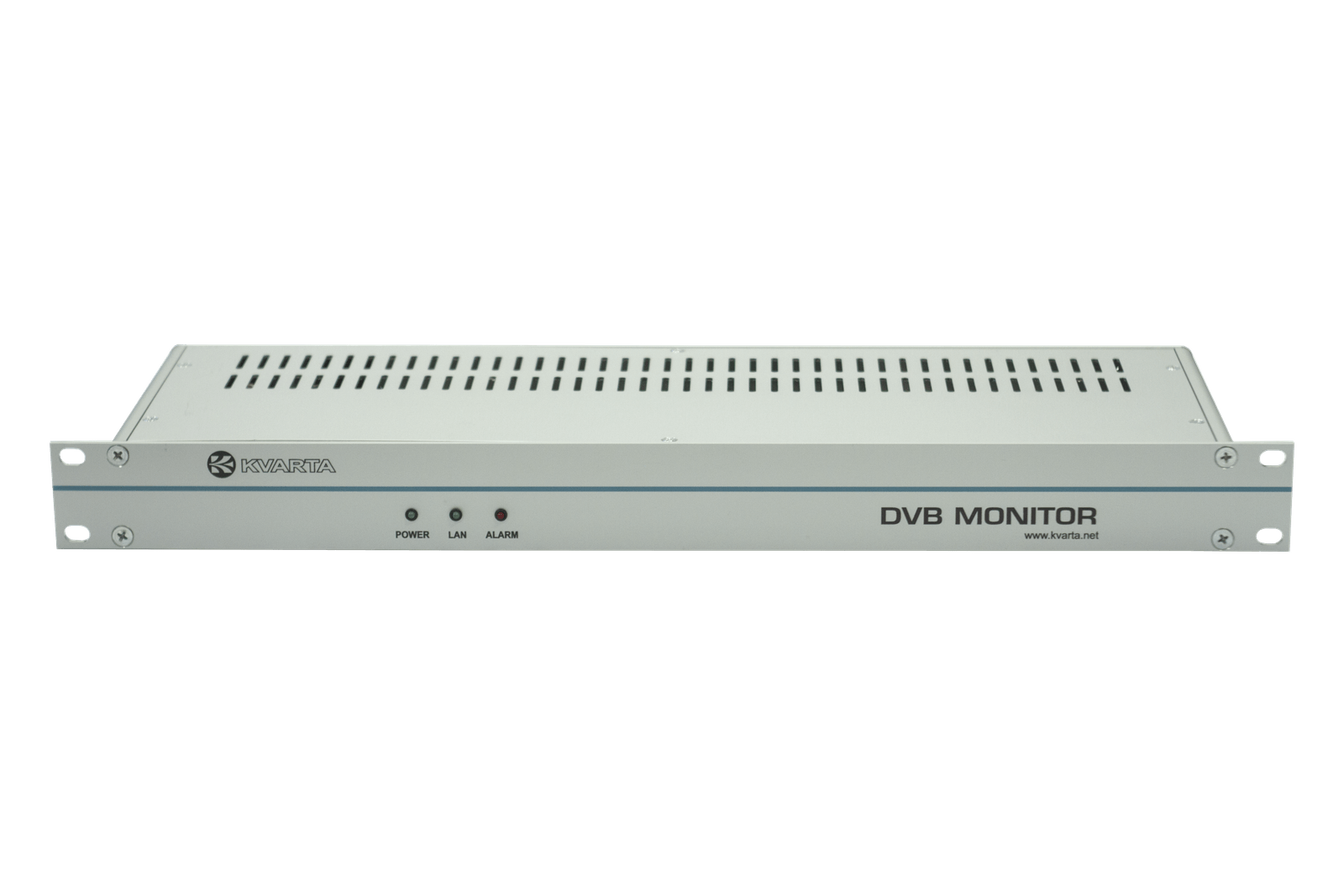
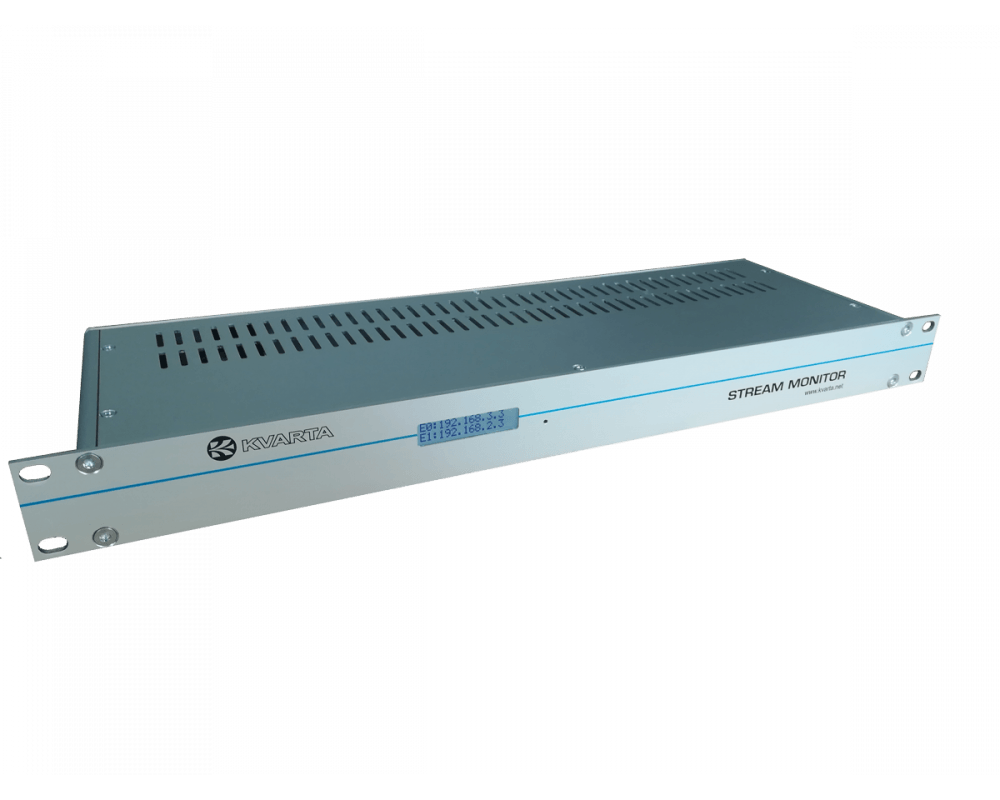
The DVB Monitor T/T2 and the DVB Stream Monitor sit at the transmitter site or in the coverage area. They scan a list of channels in turn and measure BER, VBER, CBER, C/N, SNR and level, and the DVB Stream Monitor adds MER. They also decode the MPEG transport stream. Everything is reported on the device’s web page and over SNMP.
What is checked
- MER, BER, VBER, CBER
- C/N, SNR and level
- MPEG TS and service alarms
- Band scanning
Devices
Recommended for this use case
FAQ
Common questions
Can one device monitor several multiplexes?
Yes. The monitor scans a set list of channels in sequence and continuously checks each one.
Does it also cover DVB-C or satellite?
The DVB Monitor T/T2 has options for cable and DVB-S/S2. The DVB Stream Monitor covers DVB-T/T2, S/S2, C and analog in one unit.
Related
More in Digital TV monitoring
DVB-S/S2 satellite downlink monitoring
Know when a satellite feed degrades before it reaches your headend.
Read the use caseDVB-C and QAM cable network monitoring
Watch QAM carriers and services across your cable plant, 24/7.
Read the use caseSNMP and e-mail alarms for unattended broadcast sites
Every KVARTA device reports to your NMS, with no extra software.
Read the use caseSee it on a live device
Open the demo lab (free registration), or tell us about your network and we will propose a setup.